Why Europe Needs Federation
As AI and cloud adoption accelerate, federation – not centralization – are the key to scaling Europe’s digital ecosystems.
Europe is entering a new phase of digital transformation. Artificial intelligence is accelerating, digital business models are gaining strategic importance, and cloud infrastructure is increasingly recognized as a critical foundation for competitiveness and resilience. But one question is becoming more urgent: Are Europe’s digital foundations ready to support this transformation at scale?
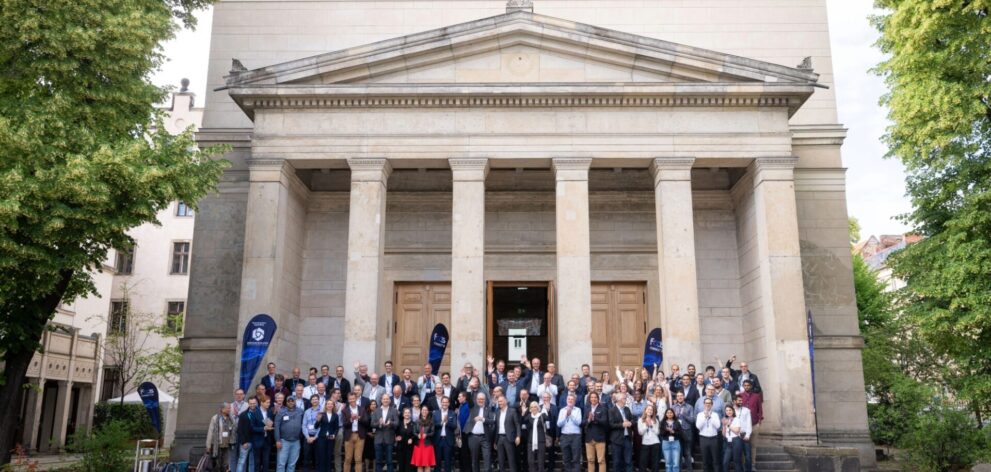
This was the central question addressed by Emma Wehrwein, FACIS Project Lead and Senior Manager Innovation & Digital Ecosystems at eco – Association of the Internet Industry, during her presentation at FACIS Connect 2026. Drawing on the new FACIS Executive Pulse 2026 survey of 800 European industry decision-makers, she highlighted a key shift: Europe’s companies are ready to digitalize – but turning ambition into operational reality remains the real challenge.
Digital Ambition Is No Longer the Challenge
The FACIS survey shows that many European industrial companies have already laid the strategic foundation for digital transformation. According to the survey, 88% of respondents have a digital strategy, 80% are already working on AI strategies, and 92% plan to introduce new digital business models.
These figures reveal an important point: awareness is no longer the issue. Companies understand the strategic relevance of digitalization, AI, and new data-driven business models. The question is no longer why organizations should digitalize, but how digitalization can become operational, scalable, and resilient.
From Strategy to Execution
While ambition is strong, implementation remains difficult. Companies continue to face barriers such as cybersecurity and data protection concerns, high costs, regulatory complexity, skills shortages, and legacy systems.
More fundamentally, these barriers point to a broader challenge: fragmentation. Digital markets, infrastructures, governance models, and service environments are still too often disconnected, making it difficult to scale innovation and collaboration across organizations and national borders.
These challenges are not isolated technical problems. They show that digital transformation increasingly depends on the ability to collaborate across fragmented infrastructures, providers, organizations, and regulatory environments.
This is where the discussion moves beyond technology. Europe’s digital future will depend not only on individual innovation, but on the ability to make collaboration work in practice.
At the same time, Europe’s digital infrastructure is evolving rapidly. Cloud adoption, AI capabilities, and digital platforms continue to mature. Yet business transformation is progressing more slowly. The challenge is no longer building technical capability. it is translating that capability into operational collaboration and new business value.
Collaboration Is Understood - But Ecosystems Are Not Yet Scaling
One of the most striking findings of the survey concerns digital collaboration. While 76% of respondents consider partnerships essential for digital growth, only 5% currently orchestrate or participate in digital ecosystems.
This gap is highly relevant. It shows that European companies understand the importance of collaboration, but operational ecosystem scaling remains limited.
Digital ecosystems do not emerge automatically. They require shared standards, trust frameworks, governance models, interoperability, and practical mechanisms that enable organizations to work together without losing control over their data, services, or business relationships.
As organizations increasingly rely on AI, cloud, and distributed data, interoperability across organizational boundaries becomes a prerequisite for entirely new digital business models.
Federation as the Missing Operational Layer
Emma Wehrwein emphasized that federation should not be understood as an abstract technical concept. In fact, federation already works every day: the Internet itself is based on decentralized actors collaborating through shared protocols and common operational rules.
Nobody owns the Internet. Nobody controls all of it. Yet it functions successfully because thousands of independent actors agree on shared standards, shared protocols, and shared operational rules.
Emma Wehrwein, FACIS Project Lead, eco – Association of the Internet Industry
The same principle is now needed for Europe’s digital infrastructure. As AI, cloud, edge computing, and data exchange become increasingly interconnected, organizations need ways to combine resources across providers and borders while maintaining sovereignty and control.
Federation provides this operational layer. It enables independent actors to collaborate through shared rules, interfaces, and trust mechanisms – without requiring centralization.
Rather than creating another centralized platform, federation connects existing infrastructures through common standards and governance. In this way, it becomes the operational layer that allows Europe’s growing digital capabilities to be deployed at scale.
Cloud Roaming: Making Federation Tangible
One of the most intuitive examples presented was the idea of cloud roaming. Mobile roaming made connectivity across national borders largely seamless for users. The network adapts in the background; the user no longer has to manage complexity when crossing borders.
Cloud and edge services today often still feel like the pre-roaming era of mobile communications: fragmented platforms, vendor lock-in, complex contractual arrangements, and services that stop at organizational or national boundaries.
Cloud roaming describes a future in which digital services can move more seamlessly across infrastructures, providers, and countries. In such an environment, the infrastructure adapts to the service – not the other way around. Just as mobile roaming transformed connectivity into a seamless user experience, cloud roaming illustrates how trusted, interoperable infrastructure can remove complexity and make digital collaboration across Europe significantly easier.
From Infrastructure to Adoption
Europe is already working on the foundations for this vision. The 8ra initiative aims to build a federated cloud-edge continuum across Europe, connecting providers and enabling interoperability, scalability, and cross-border service continuity.
FACIS contributes to this broader effort by focusing on the space between infrastructure and adoption. Its work addresses practical questions:
- How can trusted service quality be established across multiple providers?
- How can organizations participate in federated environments more easily?
- How can interoperability, governance, and real-world use cases help move federation from concept to implementation?
Through approaches such as Service Level Agreement (SLA) governance, Federation Architecture Patterns, demonstrators, and practical proof-of-concepts, FACIS helps translate the vision of federated ecosystems into operational reality.
Ultimately, the goal is not technology for its own sake. The objective is to enable organizations to create measurable business value by combining trusted services, data, and infrastructure across providers and sectors.
FACIS | Translating the vision of federated ecosystems into operational reality
Federated Service Quality
Orchestrating Federated Ecosystems with Federation Architecture Patterns (FAPs)
Real World Adoption
Europe Has the Ambition - Now Europe Must Scale Collaboration
The FACIS survey makes one thing clear: Europe’s companies want to innovate. They are investing in digital strategies, AI, and new business models.
The next challenge is not ambition. It is operational collaboration.
AI will not scale through isolated systems alone. Digital business models will not thrive if infrastructures, regulations, platforms, and trust mechanisms remain fragmented. Europe’s competitive advantage will depend on its ability to connect ecosystems – not only technologies.
As Emma Wehrwein concluded, digital ecosystems should not be viewed purely as technical systems. They are also organizational, economic, and trust-based systems.
Europe has already built much of the technological foundation. The next step is to translate technical capability into business value by enabling trusted collaboration across organizations, industries, and borders.
Europe has the ambition. Now, Europe must scale collaboration.