FACIS Connect 2026: What It Takes to Scale Trusted Digital Ecosystems in Europe
Seven takeaways on trust, governance, interoperability, and industrial AI
In This Article
At FACIS Connect 2026 in Berlin, policymakers, researchers, industry leaders, and developers came together to examine what it will take to move Europe’s federated digital ecosystems from vision to operational reality. Over two days of discussions, demonstrations, panels, a hackathon, and hands-on collaboration, one conclusion kept surfacing: the debate is no longer about whether federation is possible. It is about how Europe accelerates adoption and scales implementation.
Those discussions crystallized into seven takeaways.
1. The technology largely exists; adoption is now the challenge
One of the clearest messages of the event was that Europe already has many of the technical building blocks needed for federated digital infrastructure.
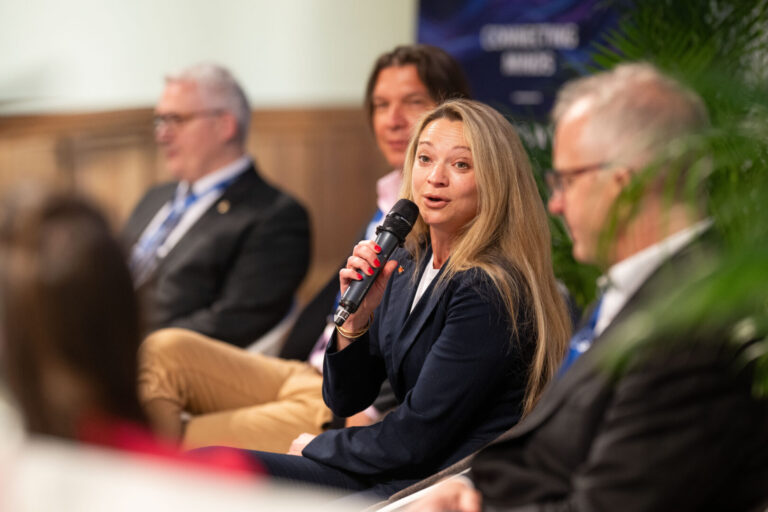
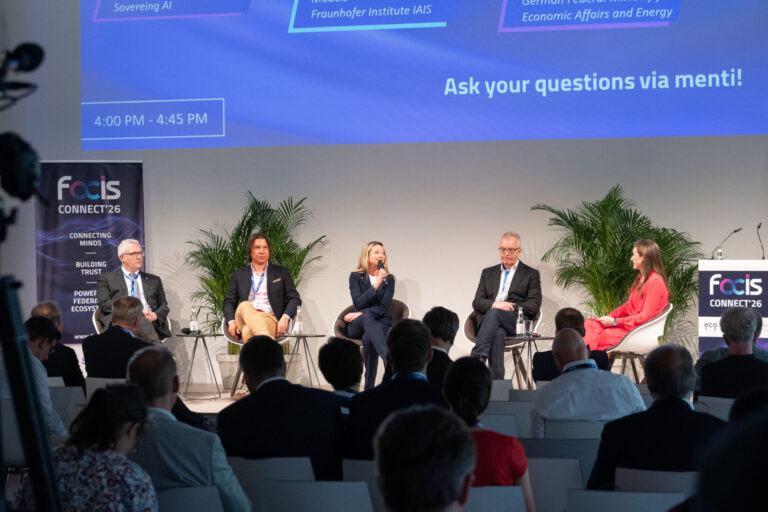
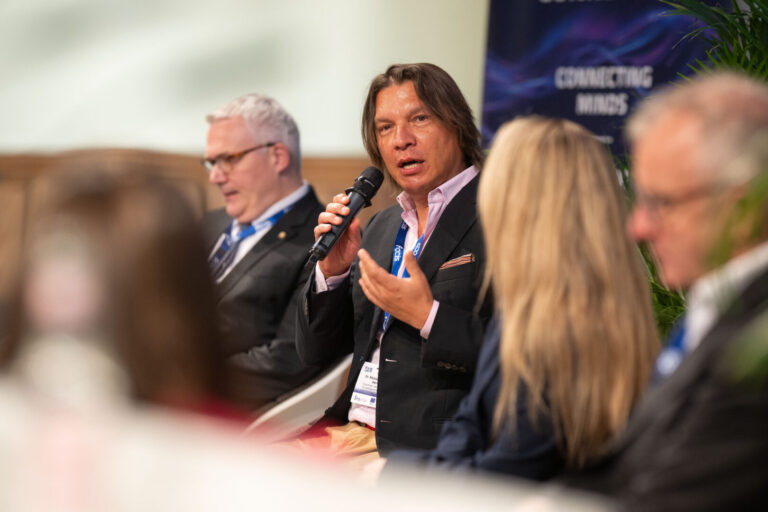
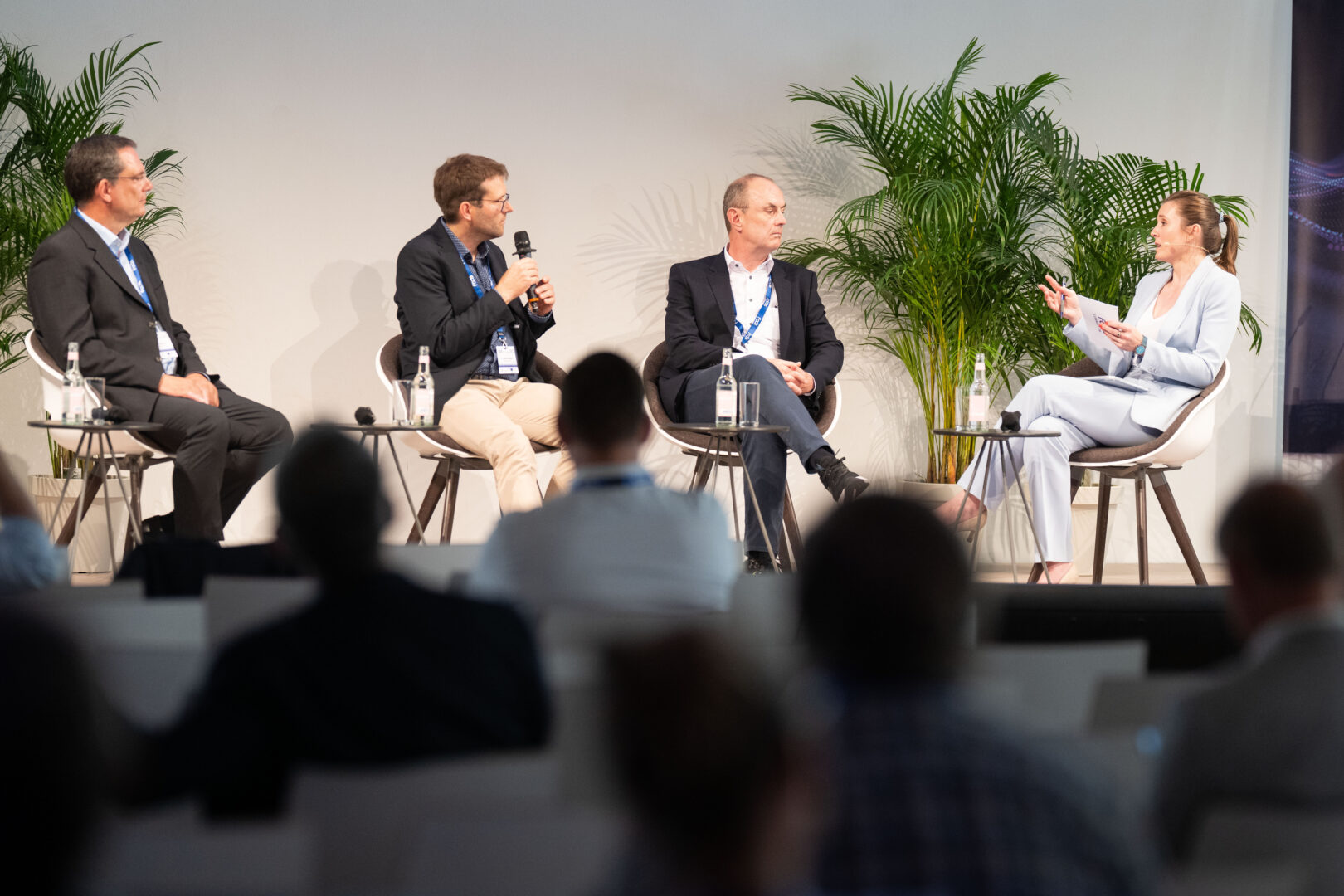
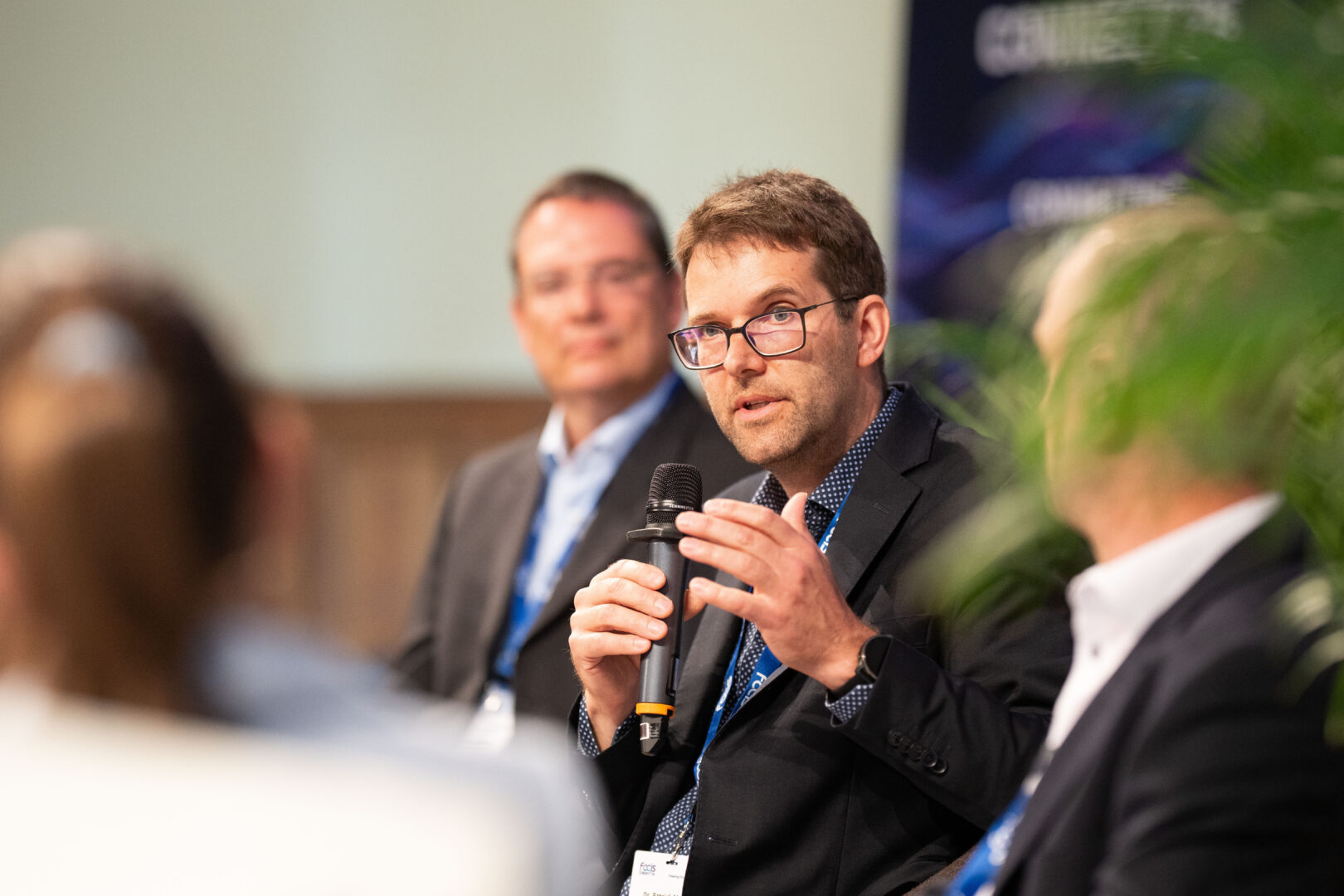
The panel “Connecting Minds, Building Trust, Powering Federated Ecosystems” captured this point clearly. Marco Schuldt (German Federal Ministry for Economic Affairs and Energy), Manuel Höferlin (Capgemini), Frank Kohler (STACKIT – Schwarz Digits Cloud), and Emma Wehrwein (FACIS, eco Association) argued that the focus must shift from proving concepts to driving adoption. Marco Schuldt noted that the infrastructure, funding, and technologies already exist; the challenge is getting organizations to use them in production.
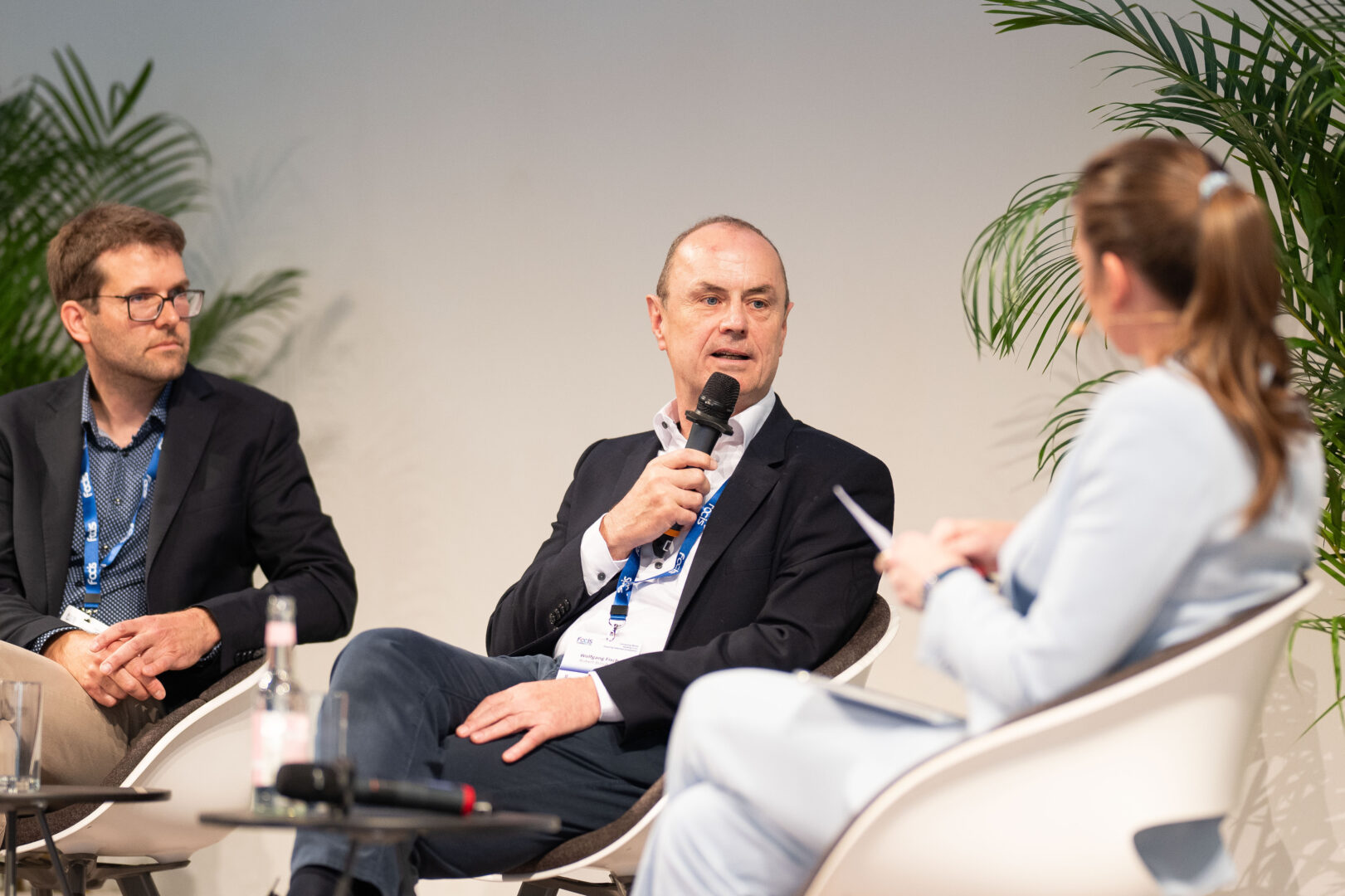
The same message also surfaced in the opening session, in Ernst Stöckl-Pukall’s call to move beyond demonstrators, and in the panel “From Pilot to Practice: What Industry Needs to Adopt Federation at Scale”, where Wolfgang Fischer (Robert Bosch GmbH), Patrick Marsch (DB InfraGO AG), and Axel Stahlhut (Amadeus GmbH) discussed the practical barriers organizations still face when adopting federated approaches.
Participants repeatedly stressed that Europe does not lack ideas or technology; it faces an execution challenge. Emma Wehrwein emphasized that technology must be translated into business value: “We have to understand how digital ecosystems can enable business scaling.” Manuel Höferlin summed it up even more directly: “The challenge is no longer technology. The challenge is implementation.” The priority now is to turn existing building blocks into adoption, deployment, and value at scale.
2. Federation is primarily a business, governance, and trust challenge rather than a technical one
The event challenged the assumption that federation is mainly an infrastructure problem.
A detailed answer came from “From Service Quality to Automation“ by Thomas Niessen (FACIS) and Prof. Sebastian Lins (University of Kassel). They showed how governance frameworks, Service Level Agreements (SLAs), monitoring mechanisms, accountability structures, and automation are becoming essential to federated ecosystems. The FACIS SLA Governance Framework Playbook and FACIS SLA Taxonomy were presented as practical tools for managing complex multi-provider environments.
Across sessions and use cases, the conclusion was consistent: technical foundations matter, but trust, governance, and business incentives will determine whether federation scales.
3. Resilience is becoming the operational foundation of sovereignty
Throughout the conference, sovereignty was framed less as independence than as the ability to keep operating under changing conditions.
Ron de Jonge’s keynote, “A Federated Europe: Building a Connected Digital Single Market Across Borders.”, expressed this idea most directly. He argued that resilience creates capability, capability enables sovereignty, and sovereignty enables action. Operational resilience, rather than isolation, was presented as the foundation of Europe’s strategic autonomy.
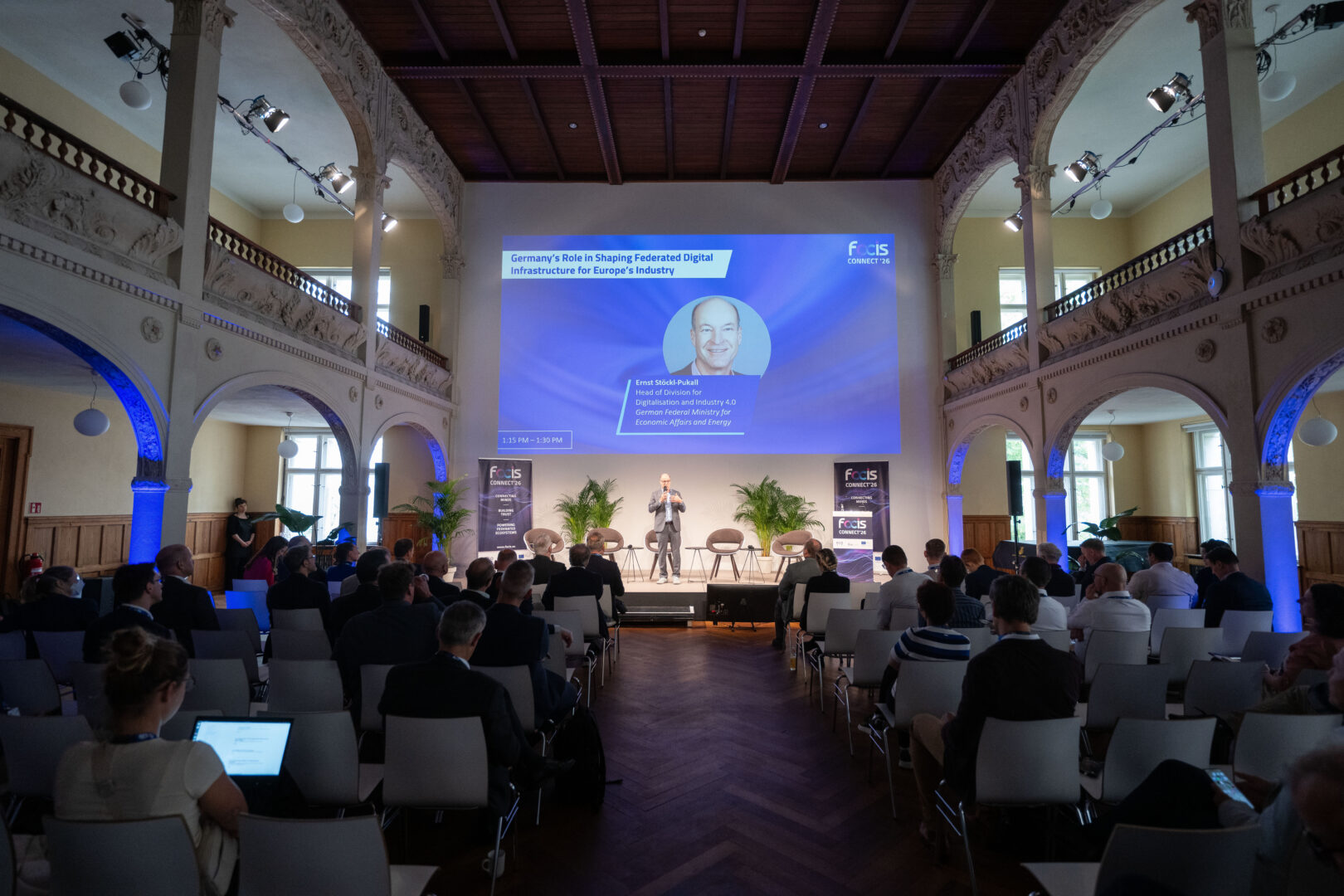
The message was echoed by Ernst Stöckl-Pukall, who linked digital sovereignty to industrial competitiveness, and by Manuel Höferlin, who highlighted resilience as a core value proposition of federation.
Ernst Stöckl-Pukall
Ron de Jonge
Manuel Höferlin4. Open source, open standards, and interoperability are essential enablers
A recurring message across both days was that federation can scale only if organizations can interoperate across technical, organizational, and national boundaries.
The panel “AI Beyond the Hype: Building Europe’s Trusted AI Ecosystem“ explored this most clearly, featuring Jörg Bienert (Center for Sovereign AI), Nicolas Flores-Herr (Fraunhofer Institute for Intelligent Analysis and Information Systems IAIS), Elena Simon (GCore), and Marco Schuldt (German Federal Ministry for Economic Affairs and Energy). Speakers highlighted open-source technologies, open ecosystems, and shared standards as prerequisites for European competitiveness.
Christian Schmitz (FACIS) reinforced this perspective during “Code, Collaborate, Connect: Inside the FACIS Hackathon“, where open-source federation architecture patterns formed the basis for practical experimentation. The hackathon showed how interoperability can move from principle to practice.
The consensus was clear: federation cannot be built on proprietary silos.
5. Trust must become measurable and operationalized
Trust was one of the most frequently used words during FACIS Connect 2026, but speakers argued that it must become measurable, not aspirational.
In “Aviation Federation in Practice“, Andreas Weiss (eco Association) and Stéphane Poulain (Airbus Operation GmbH/AXIS) showed how trust can be broken down into operational, contractual, cybersecurity, and reputational dimensions that can be evaluated, monitored, and managed. Their Airbus proof of concept turned an abstract concept into something concrete and testable.
The topic also featured prominently in “From Service Quality to Automation“, where Service Level Objectives (SLOs), Service Level Indicators (SLIs), monitoring frameworks, and automated compliance mechanisms were presented as practical trust-enabling tools. The FACIS SLA work aims to translate business expectations into measurable service commitments and governance mechanisms.
6. Europe’s greatest opportunity lies in industrial AI and ecosystem-based innovation
Artificial intelligence featured prominently throughout the event, but discussion focused less on consumer applications and more on industrial transformation.
That argument was especially strong in the panel “Industrial Collaboration in the Digital Age”, where Felix Beckmann (Airbus Operations GmbH), Klaus Ottradovetz (International Manufacturing-X), Martin Enders (Schaeffler), and Alexander Löser (Berlin University of Applied Sciences) argued that Europe’s competitive advantage will come from combining industrial expertise, trusted data ecosystems, open collaboration models, and domain-specific AI. Rather than replicating platform-centric approaches that have dominated global technology markets, speakers highlighted ecosystem-based innovation and industrial collaboration as distinctive European strengths.
Although we are talking about digital ecosystems, it's about humans. I think it's so important to bring people together because they need to have trust in each other to shape our European future.
Andreas Weiss, FACIS Co-Lead for SLA Governance and Managing Director, eco – Association of the Internet Industry
The same idea surfaced in “AI Beyond the Hype: Building Europe’s Trusted AI Ecosystem”, where Jörg Bienert, Nicolas Flores-Herr, Elena Simon, and Marco Schuldt discussed how sovereign AI capabilities depend on trusted infrastructure, open-source ecosystems, industrial adoption, and collaboration across Europe’s wider AI ecosystem.
Ernst Stöckl-Pukall’s keynote also framed industrial AI as a strategic priority for Europe’s competitiveness, stressing that industrial AI is changing the world and warning that Europe could face serious risks if it does not develop the capabilities and knowledge needed to use the technology effectively.
The conclusion was clear: Europe’s opportunity lies not in competing on scale alone, but in combining AI with trusted industrial ecosystems.
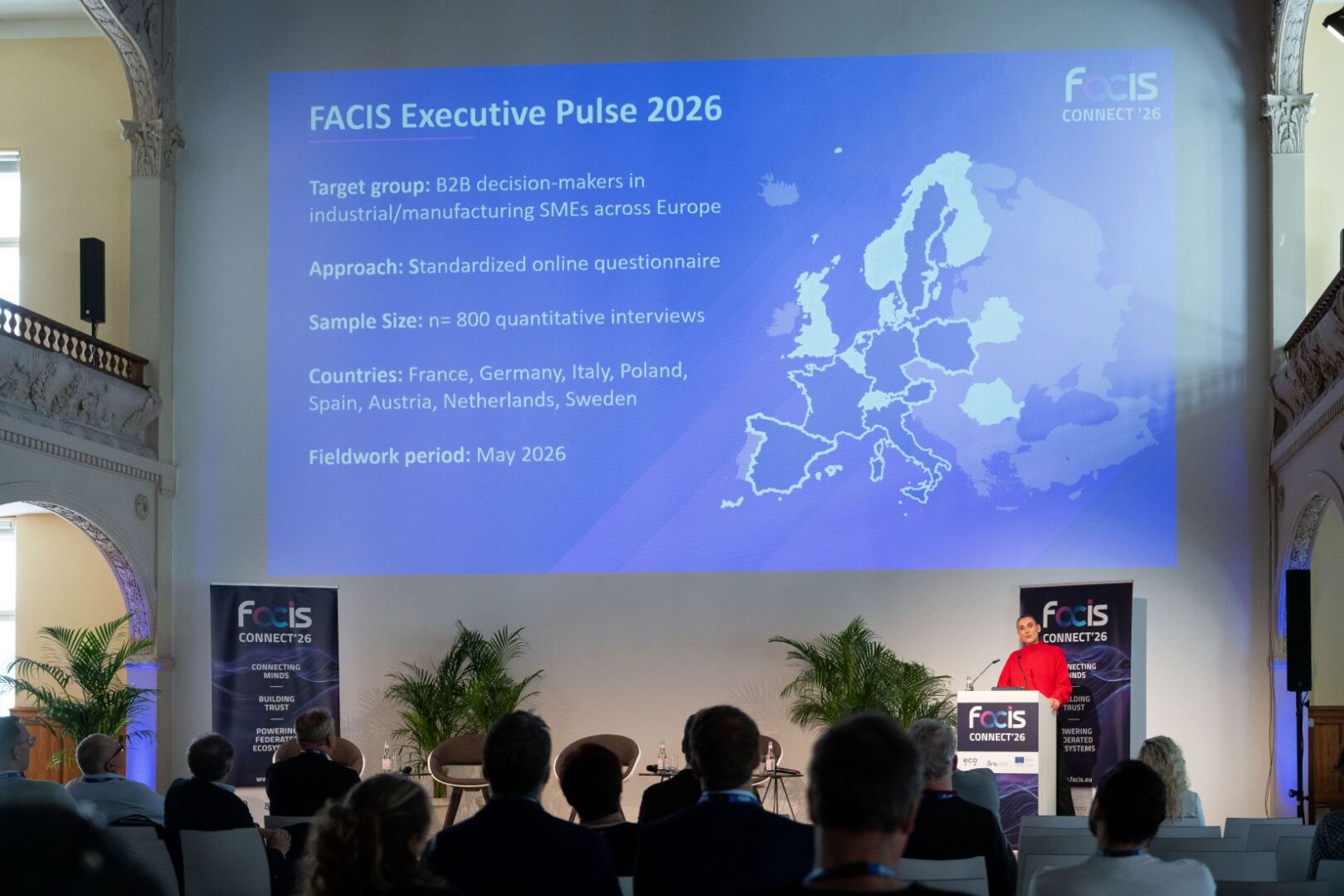
| New Survey: Quantitative insights from 800 B2B decision-makers in industrial SMEs across 8 European markets |
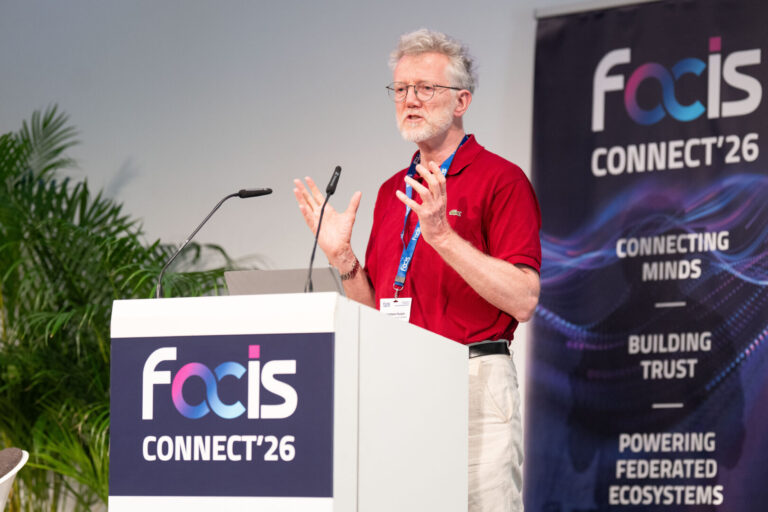
This keynote introduces the EU project FACIS and its mission to enable federated digital services and digital business models at scale. It also reveals exclusive insights from a new survey of more than 800 European industry decision makers.
In this keynote, Emma Wehrwein presents the survey findings for the first time, offering valuable insights into the current state and future direction of Europe’s digital economy.
7. The next phase requires moving from pilots and demonstrations to production-scale deployment
The strongest unifying message across both days was that Europe must move beyond experimentation. This theme was most directly addressed in “From Pilot to Practice: What Industry Needs to Adopt Federation at Scale“, where participants examined the organizational, commercial, and operational barriers that continue to slow deployment.
Taken together, the sessions reflected a common belief: Europe’s federated future will not be determined by the quality of its concepts, but by its ability to operationalize them at scale.
Looking ahead: the challenge is widespread adoption
FACIS Connect 2026 showed that federation has entered a new stage of maturity. The debate has moved beyond explaining why federation matters to confronting what it takes to make it work: governance, trust, automation, adoption, and scale.
Speakers, panelists, and practitioners approached that challenge from different angles, but shared the same conviction: Europe’s future competitiveness depends on building resilient, interoperable, and trusted digital ecosystems.
As Andreas Weiss observed, digital ecosystems are ultimately about people. Federation depends on bringing organizations together, building trust, and creating the conditions for ideas, data, and services to move across boundaries. Technology provides the foundation, but collaboration turns infrastructure into ecosystems.
Many of the building blocks are already in place. The challenge now is to turn them into widespread adoption, operational deployment, and lasting business value. Europe’s federated future will be shaped less by the technologies it develops than by how effectively it puts them to work.